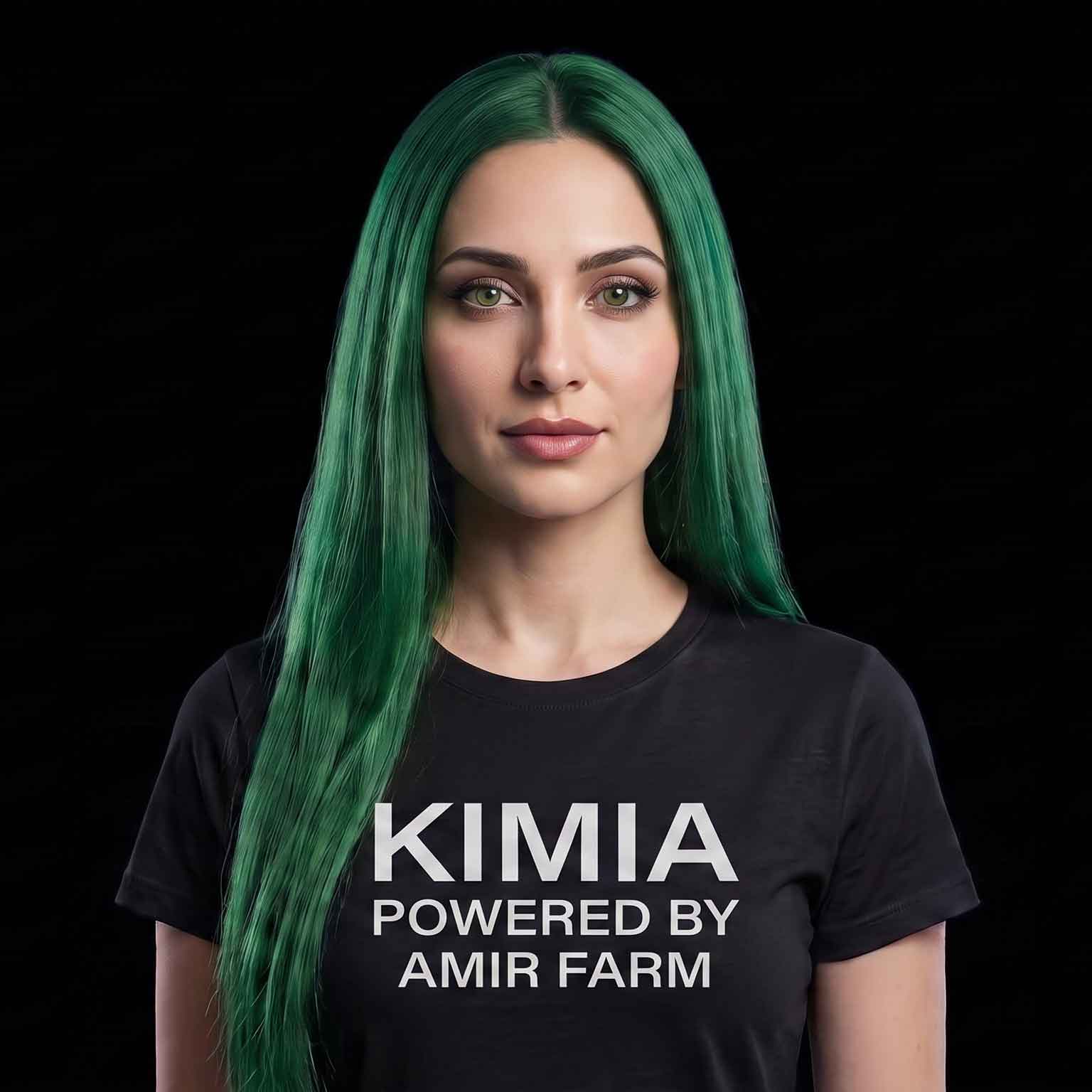
KIMIA is an agricultural artificial intelligence system designed to understand plants, crops, soil, weather, irrigation, pests and agricultural data — transforming complex information into actionable intelligence.
KIMIA brings multiple agricultural intelligence layers together. Images, environmental information, soil data, weather conditions, sensor signals and aerial observations can be transformed into a unified understanding of the agricultural environment.
Analyze plant, leaf, crop and field images using computer-vision based agricultural intelligence.
Understand plant identity, visible health, symptoms, stress, damage and growth patterns.
Analyze visible pest symptoms and agricultural risk patterns.
Work with soil moisture, temperature, pH, EC, salinity and nutrient-related information.
Incorporate temperature, humidity, rainfall, wind, radiation, frost and heat-stress information.
Support smarter irrigation decisions using crop and environmental conditions.
Convert aerial observations into structured agricultural intelligence.
Connect sensor information to AI-driven analysis and decision support.
Move from observation toward risk analysis, prediction and proactive decisions.
Ask KIMIA about plants, pests, soil, irrigation, agricultural conditions or your farm.
KIMIA is designed around agricultural problems, agricultural data and agricultural decision-making.
Text, visual information, environmental data, sensors and aerial observations can become part of the intelligence process.
KIMIA is designed to move beyond simple identification toward understanding, risk analysis and decision support.
KIMIA can operate as an intelligence layer alongside AMIR FARM drones, sensors, computer vision, robotics and agricultural systems.
Complex agricultural information is transformed into clearer insights and practical recommendations.
The architecture can evolve from a single plant interaction to connected farm intelligence.
Meet KIMIA — the intelligence layer of AMIR FARM, built to connect plants, data, artificial intelligence and the future of agriculture.